
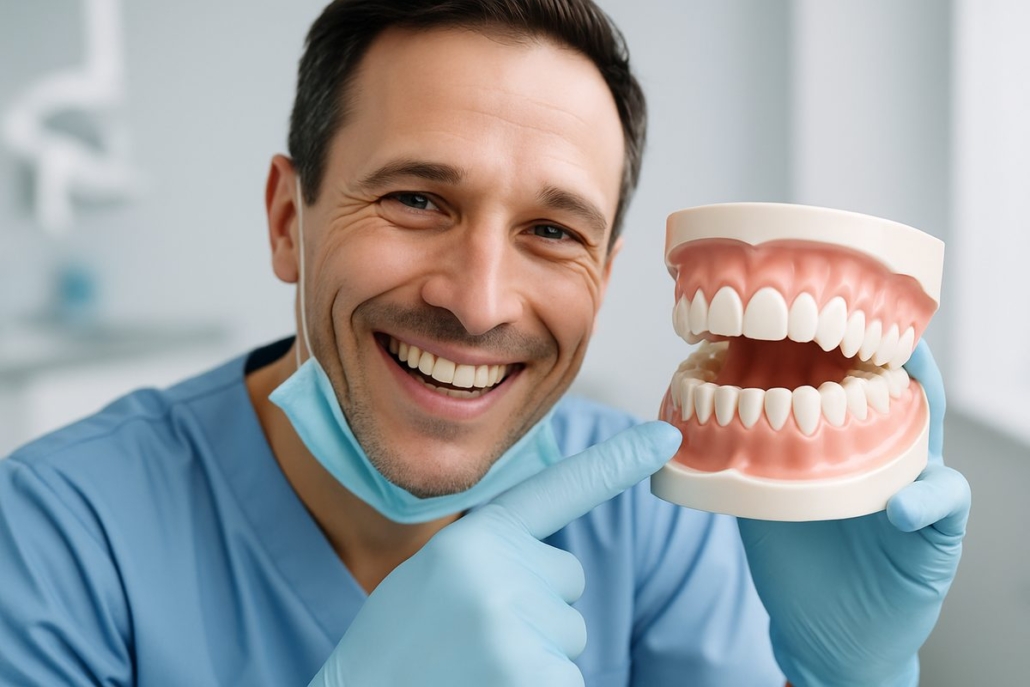
Are You Really Getting Fake Teeth? Understanding Implants
Are you wondering if you’re really getting fake teeth? The short answer: it depends on which treatment you choose. This post will give clear facts about getting fake teeth, who benefits from each option, and what to expect so you can make an informed decision.
What people mean by “getting fake teeth”
When people say getting fake teeth, they often mean different things. Some call crowns, bridges, dentures, or implant-supported prostheses “fake teeth,” but these treatments vary a lot in how they look, feel, and function.
Crowns cover single damaged teeth. Bridges replace one or a few teeth by anchoring to nearby teeth. Dentures are removable plates that replace many or all teeth. Full-arch implant prostheses are permanent solutions attached to implants. Each option has different outcomes for chewing, speech, and long-term oral health.
Types of options for getting fake teeth
Dental implants
Dental implants are titanium posts placed in the jawbone that act like tooth roots. A crown is attached to the post, making a single implant behave much like a natural tooth. Implants preserve bone, provide strong chewing function, and are considered the closest option to a natural tooth when people talk about getting fake teeth.
Implant-supported bridges and full-arch (fixed) prostheses
Implant-supported bridges replace multiple teeth using several implants as anchors. Full-arch fixed prostheses (often called All‑on‑4 or All‑on‑X) mount an entire arch of teeth on a small number of implants. These fixed solutions use high-strength materials like zirconia and are used when many or all teeth need replacement.
Removable dentures and partials
Removable dentures are an economical option for replacing teeth. They are easier to adjust and replace but can feel less stable and may need adhesives. Partials replace some missing teeth and rely on clasps or attachments. Dentures can be a good short-term or budget option, but they generally don’t preserve bone the way implants do.
How implants feel and function vs. “fake” myths
Many myths paint all replacements as obviously fake. In reality, implants integrate with bone and often feel and perform like natural teeth. They restore bite force, help preserve jawbone, and reduce movement that can cause slurred speech or uncomfortable rubbing.
- Myth: Implants always feel fake. Reality: Most patients report implants feel natural after healing.
- Myth: Dentures are the same as implants. Reality: Dentures are removable and less stable; implants are fixed to bone.
- Myth: Implants don’t last. Reality: Implant fixtures often last decades with proper care; restorations may need replacement sooner.
Who is a good candidate for getting fake teeth (implant vs denture)
Good candidates for implants are generally healthy adults with enough jawbone, good oral hygiene, and controlled medical conditions. Smoking, uncontrolled diabetes, or certain bone conditions can reduce success rates. Older age alone is not a disqualifier.
If bone volume is low, bone grafts or alternative designs may help. When implants are not suitable, well-made dentures or implant‑retained dentures can restore function and appearance as a reliable alternative.
What to expect during the implant treatment process
Consultation and digital planning
Your first visit typically includes medical and dental history, scans, and a digital plan. Scans and smile design help predict outcomes and tailor the treatment to your mouth, which is crucial when people consider getting fake teeth.
Surgery and immediate-load possibilities
Surgery places implants in the jaw. Some patients qualify for immediate-load or “teeth‑in‑a‑day,” where temporary teeth are attached the same day. Immediate-load depends on bone quality and the clinical plan.
Healing, final restorations, and follow-up
Osseointegration (bone bonding to the implant) usually takes a few months. Patients wear provisional teeth, then receive final crowns or a permanent prosthesis. Regular follow-ups help monitor healing and long-term success.
Longevity, warranty, and maintenance when getting fake teeth
Crowns and prosthetic teeth typically last 10–15 years or longer depending on material and care. Implant fixtures can last decades. Zirconia prostheses are highly durable and stain resistant.
Daily care includes brushing, flossing, and professional cleanings. Ask about warranties—some providers offer lifetime warranties on select zirconia prostheses, which can add long-term value and peace of mind.
Cost, financing, and value considerations
Implants have higher upfront costs but often better long‑term value due to durability and bone preservation. Dentures are less expensive initially but may need frequent adjustments or replacements.
Financing plans are common. Ask what materials and lab work are included, whether zirconia or acrylic is used, and what the warranty covers to compare true value between options.
Common patient concerns about getting fake teeth
- Will it hurt? Most patients have manageable discomfort controlled with medication and resolve in days to weeks.
- Can I eat normally? Implants and fixed prostheses restore much of normal chewing ability; dentures may limit certain foods.
- Will they look natural? Proper planning and materials produce very natural results.
- How long is recovery? Initial healing in days; full integration in months depending on the case.
Choosing the right team: what to look for
Look for specialists with experience in full‑mouth reconstructions, clear digital workflows, and in‑house lab capabilities for consistent results. Check for providers who use CAD/CAM and high‑strength materials and who offer transparent financing and warranty information.
OneSolution® Dental Implant Centers combines specialized doctors, advanced digital planning, and in‑house fabrication to deliver implant care efficiently. Their team emphasizes immediate‑load protocols and offers warranty options on select zirconia prostheses.
Next steps if you’re considering getting fake teeth
Book a consultation and bring your medical and dental history. Ask about digital planning, immediate‑load possibilities, materials (zirconia vs acrylic), included lab work, and warranty terms. If you’re ready, schedule an evaluation to get a personalized plan and clear cost estimate.
Ready to learn more about getting fake teeth? Schedule an evaluation to review your options and get a custom plan for restoring function and confidence.


Leave a Reply
Want to join the discussion?Feel free to contribute!