
All On Four Dental Implants: Is It Right For You By Plantation, FL?
If you’re missing most or all of your teeth and want a fixed, long‑term solution, this guide will help you decide whether all-on-four implants in Plantation, FL, are right for you. Below, we’ll explain what the All‑On‑Four approach is, who typically qualifies, how the surgery and recovery go, what it costs, and how to pick a provider. Read on to get a clear sense of the procedure, typical timelines, common risks, and the questions to ask at your consult so you can decide with confidence.
What Are All‑On‑Four Dental Implants?
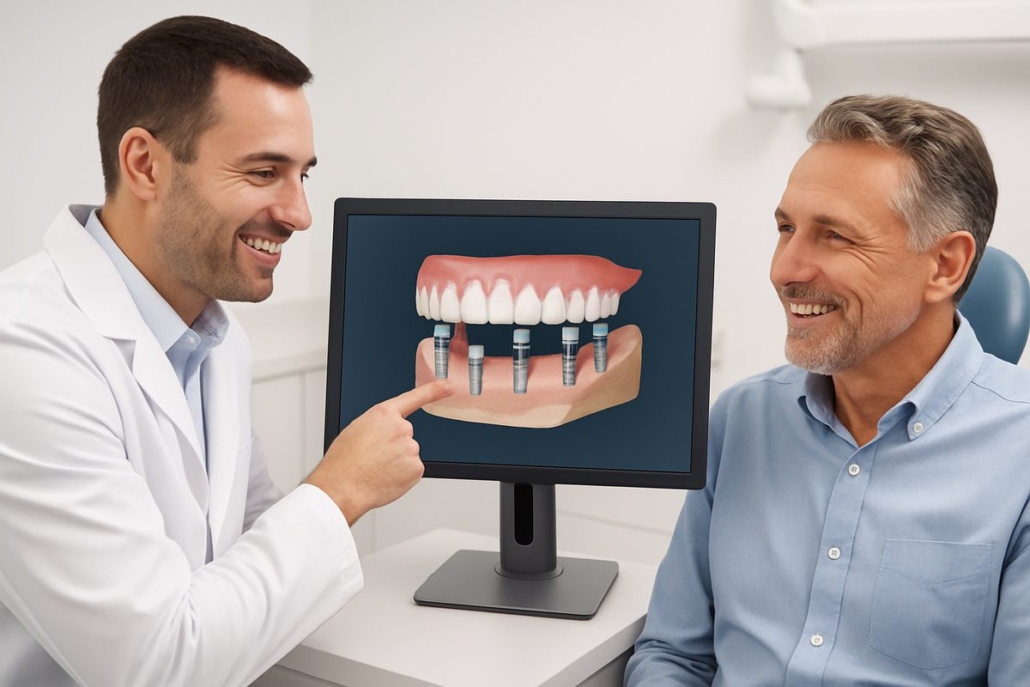
All‑On‑Four is a full‑arch replacement where a fixed prosthesis is anchored to four strategically placed dental implants. Instead of replacing each tooth with an individual implant, a full set of upper or lower teeth is supported by a bar or framework attached to those implants. This differs from single implants (one implant per tooth) and removable dentures because the All‑On‑Four prosthesis is fixed in the mouth and functions more like natural teeth. The technique often uses angled posterior implants to maximize bone support and avoid the need for bone grafting. Many patients receive a provisional fixed set of teeth on the day of surgery, then a stronger final prosthesis—often zirconia—after healing. If you’re researching all-on-four implants in Plantation, FL, expect quicker function and a more stable result than traditional dentures.
Who Is A Good Candidate For All‑On‑Four Implants in Plantation, FL?
Oral and overall health factors
Good candidates generally have controlled gum disease and adequate bone in key implant sites, though the all‑on‑four method can work for people with some bone loss. Systemic conditions like uncontrolled diabetes or advanced osteoporosis can raise risk and may need medical clearance. Smoking increases implant failure rates; patients are usually advised to quit before and after surgery to improve healing. A thorough exam with 3D imaging will show whether all-on-four implant placement is feasible. Your dentist or surgeon will review your medical history, current medications, and any conditions that could affect healing to decide if implants are safe and likely to succeed.
Functional and aesthetic goals
All‑On‑Four suits people who want fixed teeth that restore chewing, speech, and facial contours lost to missing teeth. It’s a good choice if you prefer not to deal with removable dentures, want improved bite strength, and want a natural look without frequent adhesive or removal. If your main goal is a removable option or preserving individual natural teeth, alternatives may be better. Discuss your expectations for diet, smile appearance, and daily care with your provider. Clear goals help determine if all-on-four implants in Plantation, FL, match your needs or if another full‑arch option is preferable.
Age and lifestyle considerations
Age alone is not a barrier; healthy seniors often do well with implants. Consider lifestyle factors such as activity level, travel for follow-ups, and your willingness to maintain oral hygiene. Implants require ongoing care and periodic professional maintenance. If you want a long‑term, low‑maintenance fixed solution, all on four implants plantation fl can be a strong match.
How The Procedure Works: Step‑by‑Step
Consultation and digital planning
The process starts with a consultation and 3D imaging (CBCT), intraoral scans, and photos to plan implant positions and the prosthetic design. Digital planning and smile design software let the team simulate implant placement and the final arch, tailoring bite, esthetics, and function before surgery. This planning reduces surprises and helps create predictable outcomes for all on four implants plantation fl. Your treatment plan will include whether immediate loading is possible, any needed extractions, and whether bone grafting or sinus work is required. You’ll receive a timeline and cost estimate based on this planning.
Surgery and immediate loading
On surgery day, damaged teeth are removed, implants are placed, and a provisional fixed prosthesis is attached—often the same day. Many practices use guided surgery to place implants precisely. Immediate loading means you leave with fixed teeth rather than a denture. Expect a few hours for the procedure and local or IV sedation for comfort. Early healing requires a soft diet and limited chewing on the new arch for several weeks. The provisional is designed to protect implants while you heal and to help with function and esthetics during the integration phase.
Healing and final restoration
Osseointegration (bone fusing to the implants) takes a few months. During that time, you’ll have follow‑ups to check healing and bite. Once stable, the provisional is replaced by a final restoration—often a milled zirconia bridge—for durability and a natural look. Final adjustments ensure proper fit and long‑term function. Expect follow‑ups at regular intervals the first year, then maintenance visits every 6–12 months.
Benefits Of Choosing All‑On‑Four
All‑On‑Four restores chewing strength, improves speech and facial support, and provides a fixed tooth replacement that looks and feels like natural teeth. It usually requires fewer implants than full‑arch bridges that use six or more fixtures, which can mean shorter surgery and lower initial cost. Immediate loading lets many patients leave with fixed teeth the same day, speeding recovery of function and confidence. The approach reduces the need for bone grafting in many cases, shortens overall treatment time, and, when finished with materials like solid zirconia, offers high durability and low staining for long‑term esthetics.
Risks, Complications, And How They’re Managed
Short‑term risks include swelling, bruising, bleeding, and infection—managed with medications, antibiotics when needed, and careful post‑op care. Implant failure can occur from infection, poor healing, or overload. Proper planning, precise surgery, and good oral hygiene lower these risks. If an implant fails, options include replacing the implant after healing or adjusting the prosthesis. Choose a team that uses thorough digital planning, sterile surgical protocols, and clear follow‑up care. These practices reduce complications and improve long‑term success for all on four implants, FL.
What To Expect During Recovery And Long‑Term Care
Expect soreness for several days; during the first week, follow a soft diet and chew carefully. Most normal activities resume within 3–7 days, but full healing takes months. Maintain gentle cleaning around the prosthesis during early healing and follow the provider’s instructions for rinses and diet. Long‑term care includes daily hygiene—brushing, interdental cleaning, and possibly water irrigation—plus periodic screw checks and professional cleanings. A durable prosthesis may still need occasional polishing, relines, or component replacement over many years.
Cost, Insurance, And Financing Options For All‑On‑Four Implants in Plantation, FL
Costs vary based on materials, the number of arches treated, and any additional procedures such as extractions or bone grafts. Typical total costs for an All‑On‑Four arch in South Florida can vary widely; your final quote should reflect the planned materials (provisional vs. zirconia final), the use of in‑house lab work, and the provider’s expertise. Dental insurance often limits coverage for implants; some plans may cover part of the prosthesis or extractions. Many practices offer financing plans, third‑party medical credit, or in‑house payment options to spread costs. Ask for a written estimate and available payment options during your consultation for all-on-4 implants in Plantation, FL.
Alternatives To All‑On‑Four
Alternatives include full‑arch bridges supported by more implants (six or more) for added redundancy, implant‑retained overdentures that snap onto implants and are removable by the patient, traditional removable dentures, or replacing individual missing teeth with single implants. Each option has pros and cons: more implants can increase stability but raise cost and surgery time; overdentures are less expensive but removable; traditional dentures are low cost but offer limited chewing power. Discuss function, budget, and long‑term goals with your clinician to choose the best path.
How To Choose A Provider For All‑On‑Four Implants in Plantation, FL
Look for clinicians with experience in full‑mouth reconstructions and immediate‑load protocols. Ask about the number of all‑on‑four cases they’ve done, complication rates, before/after photos, and patient references. Confirm they use 3D imaging, guided surgery, and a clear treatment plan with expected timelines and costs. Ask how they handle complications, whether they offer a warranty on the prosthesis, and if they have in‑house lab capabilities for faster, controlled restorations. Clear communication and a detailed written plan are signs of a responsible provider for all on four implants, plantation fl.
About OneSolution® Dental Implant Centers (light, factual)
OneSolution® Dental Implant Centers focuses on full‑mouth reconstructions and immediate‑load implant protocols, including cases treated at its Plantation locations. Led by Dr. Eli Friedman, the network emphasizes advanced digital planning, in‑house lab work, and same‑day fixed teeth when clinically appropriate. OneSolution® offers patient financing and, in select cases, provides a lifetime warranty on zirconia teeth. Their team includes specialists in prosthodontics and implant surgery, and the network reports having placed thousands of implants across multiple South Florida offices.
Technology & Team That Matter
High‑quality outcomes rely on digital planning software, 3D imaging, and precise milling technology, such as Ceramill 5‑axis machines, for strong, accurate zirconia prostheses. In‑house CAD/CAM and multidisciplinary teams speed turnaround and allow better control of fit and esthetics. When choosing a provider for all-on-four implants in Plantation, FL, prioritize those who combine advanced tech with coordinated surgical and restorative expertise.
Common Questions Patients Ask
Q: Does the surgery hurt?
A: You’ll be sedated or numbed; expect soreness after, controlled with pain meds, and usually improving in days.
Q: How long do zirconia teeth last?
A: With proper care, high‑quality zirconia prostheses can last many years; maintenance and regular checkups extend longevity.
Q: Is there a warranty?
A: Warranty policies vary—ask your provider for written details on prosthesis and implant coverage.
Q: When can I return to work and a normal diet?
A: Many patients return to light work within a few days; full chewing resumes gradually over weeks as directed by the team.
Q: What if an implant fails?
A: The team will evaluate causes and may remove and replace the failed implant after healing; good planning reduces this risk.
Next Steps: Is All‑On‑Four Right For You?
Prepare for a consult by bringing recent medical records, a list of medications, and any past dental imaging. Write down questions about timelines, costs, financing, warranties, and long‑term care. A thorough consultation, including 3D imaging and digital planning, will determine whether all-on-four implantation is suitable for your case. If you’re ready to learn more, schedule a consultation to review your options, view before/after cases, and get a personalized treatment plan. A focused evaluation will show whether All‑On‑Four gives you the fixed, confident smile and function you want.


Leave a Reply
Want to join the discussion?Feel free to contribute!