
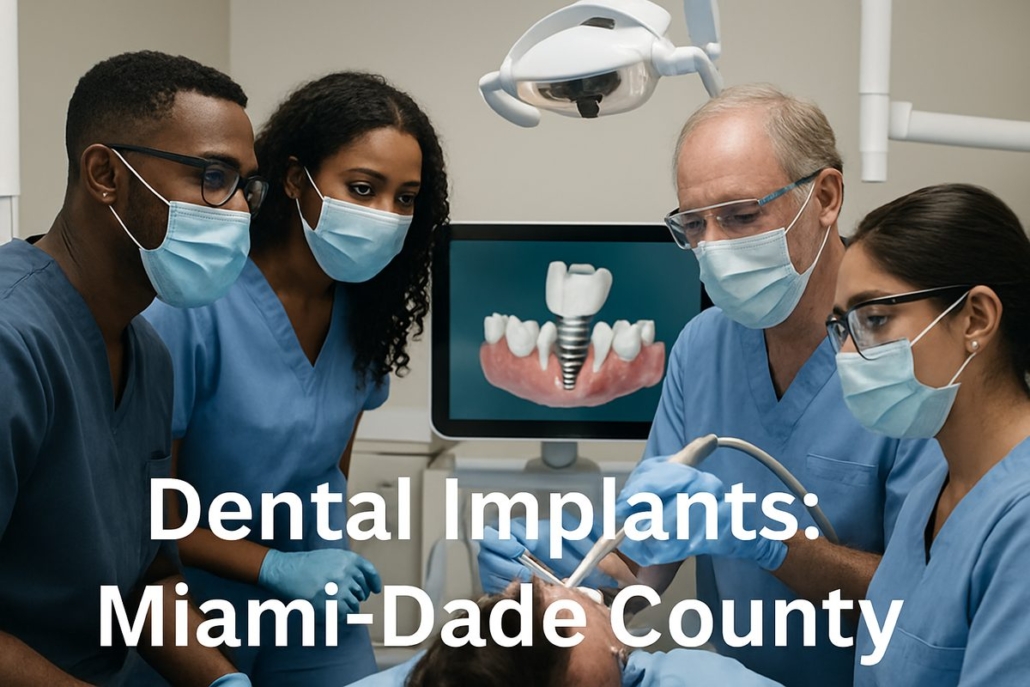
Everything About Dental Implants In Miami-Dade County, FL
This patient‑friendly guide explains everything you need to know about Dental Implants in Miami‑Dade County, FL. You’ll learn who benefits, what treatment options exist, the typical steps and timeline, cost considerations, and how to pick a provider. If you’re considering Dental Implants in Miami‑Dade County, FL, this guide gives clear next steps and questions to ask at your consultation.
What Are Dental Implants?
Dental implants are artificial tooth roots placed in the jaw to hold a replacement tooth or bridge. A complete implant restoration usually has three parts:
- Implant: a titanium or zirconia post that acts like the tooth root.
- Abutment: the connector between the implant and the visible tooth.
- Crown or prosthesis: the visible tooth or set of teeth that restores function and looks.
Well‑planned Dental Implants in Miami‑Dade County, FL restore chewing, speech, and appearance. They keep nearby teeth stable and help preserve jawbone over time.
Who Is A Good Candidate?
Many adults with missing teeth are candidates, but specifics depend on how many teeth are missing and overall health.
Single tooth vs. multiple teeth vs. full‑arch needs
Single missing tooth: an implant plus a crown replaces one tooth without affecting neighbors. Several missing teeth: implant‑supported bridges use fewer implants than separate crowns. Full‑arch replacement: hybrid fixed prostheses or All‑on‑4 style immediate‑load options can replace a full upper or lower set for faster results.
Health and bone requirements
Good gum health and enough bone are key. Chronic conditions (like uncontrolled diabetes), smoking, certain medications, and poor oral hygiene can affect candidacy. When bone is low, bone grafts or sinus lifts may be needed before or during implant treatment to make implants stable.
Types Of Implant Restorations Available
Options vary by how many teeth you need to replace and your goals for appearance and function.
- Implant‑supported crowns: Best for single missing teeth. Pros: looks natural, preserves adjacent teeth. Cons: higher cost than a bridge in some cases.
- Implant bridges: Replace several teeth with fewer implants. Pros: efficient for groups of missing teeth. Cons: requires good support from remaining bone.
- Hybrid fixed prostheses / full‑mouth (All‑on‑4, immediate‑load): Permanent fixed teeth anchored to multiple implants. Pros: fast, stable, great function. Cons: may require more planning and higher upfront cost; not every patient qualifies for immediate load.
The Typical Treatment Process And Timeline
Consultation and digital planning
Initial visits include exam, X‑rays or CBCT scans, and digital smile planning. A clear treatment plan shows how many implants, whether grafting is needed, and timing for provisional and final teeth. Good planning reduces surprises and speeds care.
Surgery and healing phases
Implant placement is usually an outpatient procedure. Healing (osseointegration) takes weeks to months depending on health and whether immediate loading is used. For single implants, you may get a temporary crown then a final crown after integration. For full‑arch cases, immediate‑load protocols can deliver fixed provisional teeth the same day in qualifying cases.
When bone grafts or sinus lifts are needed
Grafting builds bone where it’s insufficient. Sinus lifts raise the sinus floor for upper back implants. These add time—often several months—to the overall timeline but create a stable foundation for long‑term success.
Costs & Financing For Dental Implants in Miami‑Dade County, FL
Costs vary widely. Key drivers are number of implants, need for grafting, type of final prosthesis, and lab/material quality.
- Single implant with crown: typically lower overall cost but varies by materials.
- Multiple implants or bridges: increases with number of implants and lab work.
- Full‑arch restorations: highest upfront cost, but can be more cost‑effective per tooth and often include warranties for select materials.
Insurance may cover part of treatment but rarely covers full implant costs. Many Miami‑Dade County practices offer financing or monthly payment plans to spread cost. Always request a written estimate that lists all fees, implants, and lab charges.
How To Choose The Right Provider Near Miami‑Dade County
Look for documented experience and relevant credentials. Key items to ask for:
- Specialty training (prosthodontist, oral surgeon) or extensive implant experience.
- Evidence of cases: before/after photos and patient reviews.
- Technology and in‑house capabilities like digital planning and on‑site lab.
- Clear written treatment plans and transparent cost breakdowns.
Key Technologies That Improve Outcomes
Modern tech improves fit, speed, and esthetics for Dental Implants in Miami‑Dade County, FL:
- Digital scanning and smile‑design software for accurate planning.
- CAD/CAM and 5‑axis milling for precise, strong zirconia restorations.
- In‑house labs for faster turnaround and close quality control.
Aftercare, Longevity, And Warranties
Daily care—brushing, flossing, and regular dental checkups—extends implant life. Implants often last decades with good care. Prosthesis lifespan varies by material; solid‑block zirconia can offer superior strength and stain resistance. Ask about maintenance programs and any warranty on materials or workmanship.
Why Patients Choose OneSolution® For Implant Care
OneSolution® focuses on full‑mouth reconstructions and immediate‑load options when clinically appropriate. The team is led by Dr. Eli Friedman and includes specialists in prosthodontics and implant dentistry. Many locations in South Florida, in‑house lab capabilities, and advanced digital workflows help shorten treatment time and improve outcomes. Select zirconia cases come with a lifetime warranty on the prosthesis, which is a strong signal of confidence in materials and lab work.
Getting A Consultation For Dental Implants in Miami‑Dade County, FL
Bring any recent X‑rays, a list of medications, and your dental history. Ask these key questions:
- Am I a good candidate for implants or an immediate‑load option?
- How many implants and what type of prosthesis do you recommend?
- What technologies and warranties are included?
- Can you provide a detailed written estimate and financing options?
Many practices offer virtual consults to review your situation before an in‑office visit. To request an appointment, choose a provider that shares detailed case results and a clear treatment plan for Dental Implants in Miami‑Dade County, FL.


Leave a Reply
Want to join the discussion?Feel free to contribute!