A smiling senior woman is talking to her dentist about "dental implants Miami Dade county fl." No text on the image.

Dental Implants: Are They Right For You in Miami-Dade County, FL?

Deciding whether dental implants are right for you can feel overwhelming. This guide will help you understand what dental implants are, who makes a good candidate, the types of treatments available, what to expect during the process, and how to manage costs. If you’re researching dental implants in Miami-Dade County, FL, this post focuses on practical factors to help you make an informed choice and prepare for a consultation.

What are dental implants, and how do they work?

A dental implant is a small titanium (or zirconia) post placed in the jaw to replace a missing tooth root. An abutment connects the implant to a final crown, bridge, or denture. Over several months, the implant fuses to the bone through osseointegration — a natural process that creates a stable foundation for replacement teeth. Main benefits include restored chewing function, improved appearance, preservation of jawbone, and clearer speech.

Common reasons people choose dental implants in Miami-Dade County, FL

People choose dental implants for a single missing tooth, several missing teeth, or a full-arch solution. Implants are often chosen instead of removable dentures or traditional bridges because they are more stable, reduce bone loss, and don’t require grinding down healthy adjacent teeth. Many patients in Miami-Dade County prefer implants for long-term comfort and function.

Who is a good candidate for dental implants in Miami-Dade County, FL

Good candidates generally have healthy gums and enough jawbone to support implants. Smoking, uncontrolled diabetes, certain medications (like long-term bisphosphonates), and active gum disease can raise the risk of complications. Age alone is rarely a barrier — older adults often do well if their overall health and bone levels are adequate. When the bone is thin, bone grafting or sinus lifts can create the volume needed for reliable implant placement.

Types of implant treatments to consider

Single-tooth implant and crown

A single implant replaces a single missing tooth without altering the neighbors. Recovery is usually straightforward: placement, a healing period for osseointegration, then a final crown. Most patients return to normal activities within a few days and regain full function once the final crown is placed.

Implant-supported bridge

When several adjacent teeth are missing, two or more implants can support a bridge. This avoids shaving down healthy teeth as a traditional bridge would, and it delivers stronger chewing power and better long-term bone support.

All‑on‑4 / immediate-load full‑arch solutions

All‑on‑4 and similar immediate-load protocols use multiple implants to support a full arch of fixed teeth, often placed and provisionally loaded in one visit when clinically suitable. These solutions help patients regain function quickly and are a common choice for people replacing all upper or lower teeth.

Zirconia, hybrid, and material choices

Materials affect strength and appearance. Solid-block zirconia prostheses are strong, stain-resistant, and metal-free. Layered porcelain offers excellent aesthetics but can chip if not designed correctly. Hybrid prostheses combine a metal or titanium substructure with acrylic or layered teeth for a balance of cost and repairability. Your prosthodontist will recommend options based on function and esthetic goals.

What to expect during the treatment process

Expect a consult first, including medical history and oral exam. Digital scans and a CBCT (3D) image help map bone and vital structures. A treatment plan will outline the number of implants, the need for grafting, and the timeline. Surgical placement may be done with local anesthesia, sedation, or IV sedation, depending on the case. After placement, there is a healing phase for osseointegration, followed by a final restoration. Many practices use digital planning, in‑house labs, and same‑day workflows when safe, which can shorten the timeline from months to weeks in some cases.

Risks, recovery, and how to care for implants long term

Short-term risks include infection, swelling, bleeding, and, very rarely, implant failure. Watch for severe or increasing pain, pus, or loose fixtures and notify your provider. Early recovery tips: rest, ice, soft foods, and follow prescribed antibiotics or pain meds. Long-term care involves excellent oral hygiene — brushing, interdental cleaning around implants, and regular professional cleanings. Routine checkups let your team monitor bone levels and spot peri-implant disease early to protect long-term success.

Cost, insurance, and financing for dental implants in Miami-Dade County, FL

Cost drivers include the number of implants, the need for bone grafts or sinus lifts, the choice of prosthetic material, and lab work. Single implants with a crown cost differently from full-arch All‑on‑4 solutions. Many dental plans limit implant coverage or only cover part of the restorative work. Common financing options include in‑house payment plans, third‑party lenders (such as CareCredit and similar), and low-monthly-payment programs. Ask your provider for a written estimate and breakdown so you can compare options.

How to choose the right implant provider near Miami-Dade County, FL

Ask about credentials: prosthodontists, oral surgeons, and periodontists have specialized training in implant care. Inquire about years of experience, professional affiliations, and continuing education. Ask to see before-and-after photos and patient case studies. Important facility and tech questions: Do they use CBCT imaging? Do they have digital planning software? Is there an in‑house lab or advanced milling equipment for precision restorations? Discuss success rates, follow-up care, and warranties for prostheses.

Why some patients choose OneSolution® for implant care

OneSolution® Dental Implant Centers focuses on full-mouth reconstructions and immediate‑load protocols when clinically appropriate. Led by Dr. Eli Friedman and a specialized team, the network emphasizes digital planning, an in‑house lab, and high‑strength zirconia prostheses. Technologies include Ceramill® 5‑axis milling, CAD/CAM workflows, and smile‑design software. OneSolution® offers financing options, quick turnaround from its lab, and a lifetime warranty on select zirconia cases, which many patients find valuable.

Next steps: Are dental implants in Miami-Dade County, FL, right for you?

To prepare for a consult, bring a list of medical conditions and medications, along with any prior dental records or X-rays. Ask questions about the number of implants recommended, timelines, alternative options, expected costs, and warranty terms. If you’re considering dental implants in Miami-Dade County, FL, schedule an evaluation or virtual consult to review your CBCT scan and receive a personalized plan. Be sure to discuss financing during your visit so you can move forward with confidence.

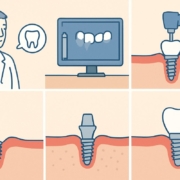
Image of a smiling elderly woman with full, bright white dentures, laughing with a dentist in a modern office to showcase full mouth dental implants. No text on image.

Full Mouth Dental Implants: What To Expect in Haverhill, FL

If you’re researching full-mouth dental implants in Haverhill, FL, this guide explains what to expect from evaluation through recovery and long‑term care. You’ll learn what full mouth dental implants are, who makes a good candidate, how dentists plan and place implants, typical recovery, risks, costs, and how to choose a provider. Where helpful, the guide notes options near Haverhill, FL, so you know what local patients commonly ask and how to prepare for a consult.

What Are Full Mouth Dental Implants?

Full-mouth dental implants replace most or all teeth in one or both jaws, using dental implants as anchors for a fixed or removable prosthesis. Common types include implant‑supported fixed bridges, All‑on‑4/All‑on‑X protocols (using 4 or more implants to support a full arch), and hybrid prostheses that combine a strong framework with tooth‑like material for esthetics. The main goals are to restore chewing ability, improve speech clarity, support facial structure, and achieve a confident smile.

Who Is A Candidate For Full Mouth Dental Implants in Haverhill, FL?

Oral and general health factors

Good candidates have healthy gums or gums that can be treated before implant placement, adequate bone volume or the ability to receive grafting, and controlled medical conditions. Conditions such as uncontrolled diabetes or heavy smoking raise risks and may require additional care. Dentists will evaluate oral infections, jawbone quality, and overall medical history to determine whether full-mouth dental implants in Haverhill, FL are a safe option.

Age and lifestyle considerations

Age alone is usually not a disqualifier; many older adults thrive with implants. Lifestyle factors like tobacco use, alcohol consumption, and commitment to oral hygiene affect success. Patients should have realistic expectations about treatment length, healing time, and maintenance. A willingness to follow post‑op instructions and attend recall visits improves long‑term outcomes.

How Dentists Plan Full Mouth Dental Implants

Planning begins with a thorough exam, dental X‑rays, and often a CBCT (3D) scan to assess bone and nerve locations. Impressions or digital scans capture bite relationships and tooth position. Medical history and expectations guide the overall plan, including whether immediate‑load options are appropriate.

Digital planning and smile design

Digital scanning and smile design software enable clinicians to simulate implant positions and final tooth shapes. CAD/CAM tools create precise surgical guides and give patients a preview of their new smile. Digital planning increases predictability and helps avoid surgical surprises.

Creating a surgical and prosthetic plan

The team chooses implant number and position based on bone quality, opposing bite, and prosthesis type. Fewer implants can be used with All‑on‑4 or All‑on‑X techniques, while full‑arch fixed bridges may need more support. The surgical plan includes whether bone grafting or sinus lifts are necessary and schedules for temporary and final prostheses.

The Full Mouth Implant Procedure: Step‑by‑Step

Before surgery, you’ll review medical history, have imaging, and receive pre‑op instructions (medications, fasting, ride home). On the day of surgery, local anesthesia and sedation options are offered for comfort. The team follows the digital surgical plan to place implants, often using a surgical guide for precision.

Implant placement and immediate‑load options

Immediate‑load protocols allow placement of temporary teeth the same day when clinical conditions are favorable. This single‑visit approach can restore function and appearance quickly. When immediate loading isn’t safe, a staged approach lets implants heal under a protective temporary denture before attaching final teeth.

Temporary vs permanent prosthesis

After implants are placed, you may wear a temporary prosthesis while implants integrate with bone (osseointegration), usually for several months. Final restorations are often made from durable materials, such as zirconia or hybrid frameworks, for strength and esthetics. The final prosthesis is adjusted for fit, bite, and comfort before being secured.

Recovery, Aftercare, And Long‑Term Maintenance

Initial recovery often involves swelling, mild to moderate pain controlled with prescribed or over‑the‑counter medications, and a soft diet for a few days. Avoid strenuous activity and follow wound care instructions. Most daily activities resume within a week, though complete healing takes longer.

Long‑term care

Daily hygiene includes brushing, flossing or interdental cleaning around implants, and using recommended mouth rinses. Regular recall visits (initially every 3–6 months) allow clinicians to check implant health, soft tissues, and prosthesis fit. With good care, implants and well‑made prostheses can last many years; periodic maintenance and possible component replacement are expected.

Risks, Complications, And How They’re Managed

Common risks include infection, implant failure, peri‑implantitis (gum infection around implants), and nerve irritation. Rare risks include sinus complications when placing upper implants. Early signs like increased pain, swelling, fever, or loose prostheses should be reported immediately. Careful pre‑planning, sterile technique, experience, and follow‑up care reduce these risks.

Cost, Insurance, And Financing For Full Mouth Dental Implants in Haverhill, FL

Costs vary widely based on the number of implants, the need for bone grafting or extractions, the choice of materials (zirconia vs. acrylic hybrid), and lab work. Full arch reconstructions are an investment; quotes should itemize surgery, implants, temporary and final prostheses, and follow‑up care. Many dental insurance plans do not fully cover implants, though they may help cover extractions or lab fees. Financing plans, third‑party medical credit, and in‑office payment options can make treatment manageable. Compare estimates by asking for a full treatment breakdown and warranty details.

How To Choose A Provider For Full Mouth Dental Implants in Haverhill, FL

Look for clinicians with specific implant and prosthodontic training, a history of full‑arch cases, and a multidisciplinary team (surgeon, prosthodontist, lab tech). Check case photos, patient reviews, and whether the provider uses modern technology like CBCT imaging, CAD/CAM workflows, and an on‑site or trusted lab. Experience with immediate‑load protocols and volume of similar cases improves predictability.

Questions To Ask During Your Consultation

Ask about the provider’s training and number of full‑arch cases performed, success and complication rates, whether a CBCT scan will be used, and options for immediate loading. Confirm the materials used for the final teeth, the expected timeline, the total cost breakdown, the warranty policies, and what follow‑up visits include. Also, ask who will manage any complications and how emergencies are handled.

Common Patient Concerns and Realistic Outcomes

Pain is usually manageable and short‑lived; most patients report discomfort that is less than expected. Speech may change briefly with new teeth, but typically improves within days to weeks. Most people can return to soft foods quickly and progress to harder foods as healing allows. A realistic timeline, clear aftercare instructions, and planned maintenance lead to predictable, long‑lasting function and natural appearance.

Options Near Haverhill, FL: Why Patients Choose OneSolution®

OneSolution® provides full‑mouth reconstructions near Haverhill, FL, using single‑visit immediate‑load protocols when clinically appropriate. The network combines an in‑house lab, CAD/CAM zirconia workflows, and a team led by experienced prosthodontic clinicians to shorten treatment time and ensure quality control. Their model emphasizes clear financing, lifetime zirconia warranties for select cases, and coordinated care across locations, which many patients find convenient and reassuring.

Next Steps If You’re Considering Full Mouth Dental Implants in Haverhill, FL

To prepare for a consultation, bring any dental records, a list of medications, and notes about your goals and concerns. Your first visit typically includes a clinical exam, X-rays or a CBCT scan, a discussion of your medical history, and an outline of treatment options and costs. Expect a candid conversation about whether immediate loading is appropriate for you and what to expect at each stage.

FAQ

Q: Will getting full mouth dental implants hurt?

A: Local anesthesia and sedation options keep discomfort low during surgery. Post‑op pain is usually short‑term and managed with medication and home care.

Q: How long do implants last?

A: Implants themselves can last decades with good care. Prostheses may need maintenance or replacement over time, depending on materials and wear.

Q: When can I eat normally after surgery?

A: You’ll start with soft foods and advance as instructed. Many patients resume most normal eating within a few weeks, with full chewing strength returning as healing completes.

Q: Do implants hurt to place?

A: The placement is done under anesthesia; you should not feel pain during the procedure. Discomfort afterward is expected but temporary.

Q: Are full mouth dental implants in Haverhill, FL, right for me?

A: A consultation with imaging and medical review is the best way to know. If you have healthy gums or treatable gum disease, sufficient bone or the possibility of grafting, and controlled medical conditions, implants may be a good solution. If you’re ready to learn more or schedule an evaluation, contact a nearby implant center to request a consult, bring your medical/dental history, and ask for a CBCT scan and a clear, written treatment plan.

An infographic showing a step-by-step tooth implant process, from initial consultation and digital planning to surgical placement, healing, abutment placement, and final restoration. No text on the image.

What Is The Process For A Tooth Implant? What To Know About Dental Implants

If you’ve searched “what is the process for a tooth implant,” this guide will walk you through each step so you know what to expect.

You’ll learn what a dental implant is, who can get one, the typical step-by-step treatment plan, recovery, risks, costs, and how to get started. This is a practical overview meant to answer common questions and help you decide if an implant is right for you.

What is a dental implant?

A dental implant is a replacement for a missing tooth that restores function and appearance. It has three main parts: the implant post (a small titanium or zirconia screw placed in the jawbone), the abutment (a connector), and the crown or prosthesis (the visible tooth). Implants act like natural tooth roots to support chewing, stabilize neighboring teeth, and preserve jawbone over time.

Who is a good candidate?

Oral and medical health

Good candidates have healthy gums, adequate jawbone, and are free from active infections. Medical conditions like uncontrolled diabetes, certain autoimmune disorders, or heavy smoking can affect healing and candidacy. Some bone loss can be treated with grafts or sinus lifts, so many people become eligible after preparatory work.

Patient goals and expectations

Implants are recommended when you want a long‑term, fixed solution versus removable dentures or a bridge. If your goal is a natural look and strong chewing ability, implants often fit best. Bridges can work for single gaps when adjacent teeth are healthy, and dentures may suit those seeking a lower‑cost, non‑surgical choice. Discuss goals and timelines with your dentist to choose the right option.

What is the process for a tooth implant — step-by-step

Consultation and digital planning

The process starts with an exam, X‑rays or a CBCT scan, and digital impressions. These tools let the dentist map bone, nerves, and sinus spaces. A clear treatment plan is made: the number of implants, whether bone grafting is needed, and whether immediate loading (same‑day teeth) is possible. Digital planning improves accuracy and outcomes.

Surgical placement of the implant

During surgery, the implant post is placed into the jawbone under local anesthesia and, if wanted, sedation. For traditional staged approaches, a healing cap is placed, and the site is left undisturbed. In immediate‑load cases, a temporary crown or prosthesis is attached the same day. The exact technique depends on bone quality and the treatment plan.

Healing and osseointegration

Osseointegration is when bone grows tightly around the implant, anchoring it. This usually takes 3–6 months for single implants, sometimes longer after bone grafts or sinus lifts. Healing timelines vary by patient health, bone density, and whether smoking or certain medications are involved. Regular follow‑ups monitor healing and bone health.

Abutment and final restoration

Once healed, the abutment connects the implant to the final crown or prosthesis. Impressions or digital scans guide lab work for a custom restoration. Materials like zirconia yield strong, natural‑looking teeth. For full‑arch cases, a fixed hybrid prosthesis may be used. Final adjustments ensure a comfortable bite and aesthetic result.

What to expect during recovery and aftercare

Expect mild‑to‑moderate soreness, swelling, and minor bleeding for the first few days. Pain control includes over‑the‑counter or prescribed medication and cold packs. Eat soft foods and avoid hard, sticky items for a few weeks. Keep the area clean with gentle brushing and salt rinses. Avoid smoking and follow all follow‑up appointments to catch issues early.

Risks, success rates, and long-term maintenance

Common complications include infection, implant failure, and peri‑implantitis (gum inflammation around implants). Most can be managed with antibiotics, cleaning, and, in some cases, revision surgery. Success rates for healthy patients are high—often above 95% for single implants over five years. Long‑term care means daily cleaning, interdental tools, and routine dental checkups to protect gum and bone health.

Costs and payment options

Price varies by the number of implants, the need for bone grafting or sinus lifts, the type of prosthesis, and lab costs. A single implant with a crown is less than a full‑arch reconstruction. Insurance sometimes covers part of restorative work, but implants are often only partially covered. Financing plans, medical credit, and in‑office payment options are common ways to manage cost. Ask for a full estimate during the consultation.

Why choose OneSolution® for dental implants

OneSolution® Dental Implant Centers focuses on implant dentistry and full‑mouth reconstructions. Led by Dr. Eli Friedman, the team offers same‑day immediate‑load options when clinically appropriate, advanced digital planning, and an in‑house lab that mills high‑strength zirconia restorations with CAD/CAM technology. Select cases include a lifetime warranty on zirconia teeth, and the centers emphasize predictable, durable, and aesthetic outcomes.

How to get started

To begin, schedule a consultation and bring any recent dental X‑rays or medical history. You’ll receive a digital exam, treatment options, and a clear cost estimate with financing choices. If you decide to proceed, the team will outline the timeline and what to expect at each visit. Call or visit the nearest OneSolution® office to set a consultation and take the first step toward a stable, natural‑looking smile.

A dental implant graphic showing a gum with teeth and a metal implant, next to text: Looking for a dental implant center in Broward County, FL? Discover options, costs and timelines. Read more now on a blue background.

Find A Great Dental Implant Center Near Broward County, FL

If you have missing, broken, or failing teeth, a specialized dental implant center can restore function and confidence faster and more predictably than standard restorations. A dental implant center in Broward County, FL, offers implant planning, surgery, and final prosthetics under one roof, ensuring coordinated care, digital planning, and clearer timelines from consult to finished teeth.

You should expect an initial exam with 3D imaging, a clear plan outlining costs and timing, and options such as single-implant, multiple-implant, or full‑arch immediate solutions. Choosing a recognized dental implant center in Broward County, FL, helps reduce surprises and improve long‑term results.

What Is a Dental Implant Center and Who Benefits?

A dental implant center is a clinic focused on replacing teeth with implants and implant‑supported prostheses rather than general restorative work. Patients who benefit include those with one failed tooth, several missing teeth, or people needing full‑arch replacement who want faster, predictable care. A dental implant center in Broward County, FL, will typically combine implant surgery, prosthodontics, and in-house lab services for streamlined treatment.

Common Implant Treatments Offered at a Dental Implant Center Near Broward County, FL

Single tooth implants

Single-tooth implants replace a single tooth with an implant and an implant‑supported crown. This is ideal when a neighboring tooth is healthy, and you want a durable, natural look and chewing function.

Multiple implants & implant bridges

When several teeth are missing, two or more implants can support a bridge. This avoids altering healthy adjacent teeth and gives a stable, long‑lasting result for chewing and speech.

Full-arch solutions (All‑on‑4 / immediate‑load)

Full‑arch or All‑on‑4 treatments attach a fixed prosthesis to multiple implants, often using immediate‑load protocols for same‑day teeth. Candidates are those with significant tooth loss or failing dentition who seek fixed, durable zirconia prostheses and faster recovery.

Key Factors to Evaluate When Choosing a Dental Implant Center Near Broward County, FL

Clinical experience and credentials

Look for prosthodontists with board affiliations and a high case volume. Clinical experience and credentials matter for complex YMYL decisions; more cases usually mean fewer complications and better outcomes.

Technology and in‑house capabilities

CBCT scans, digital planning, and an in‑house CAD/CAM lab speed treatment and improve fit. Centers with these tools can often complete immediate‑load cases with more predictable esthetics and function.

Proven outcomes and patient trust signals

Check before/after photos, patient reviews, warranty offers, and published complication rates. Clear outcomes and warranties show a center stands behind its work.

Cost, Financing, and What to Expect in the Treatment Timeline

Costs vary: single implants tend to be lower, multiple implants and full‑arch reconstructions cost more. Bone grafts, extractions, and advanced prosthetics increase the price. Many centers offer financing, payment plans, and partial insurance coverage for prosthetic work. Timeline ranges from weeks (immediate load) to several months if grafting is needed.

Questions to Ask Your Dental Implant Center Near Broward County, FL

Bring this checklist: provider credentials and case volume, are you a candidate for immediate load, do you control an in‑house lab, what warranties exist, follow‑up care plans, and emergency policies.

Why OneSolution® Can Be a Good Choice for Patients Near Broward County, FL

OneSolution® focuses on full‑mouth reconstructions and immediate‑load protocols delivered when clinically appropriate. The network offers in‑house fabrication, financing options, and a lifetime zirconia warranty in select cases, helping patients near Broward County, FL achieve faster, more durable results without long waits.

About the Doctors and Advanced Technology

Clinical leadership and team

Dr. Eli Friedman leads OneSolution® with training in prosthodontics and extensive experience in implants. A multidisciplinary team supports complex cases by combining surgical and restorative expertise to achieve predictable outcomes.

Key technologies that improve outcomes

  • In‑house lab and Ceramill® 5‑axis milling for precise zirconia prostheses
  • CAD/CAM design, digital scanning, and smile‑design software for better fit and esthetics
  • Solid‑block zirconia and hybrid implant systems for strength and long life

Next Steps: How to Find and Schedule a Consult

Verify credentials, ask to see recent cases, and bring medical/dental history and current X‑rays to your consult. If you need implant care, schedule a consultation with a dental implant center broward county fl to review options and get a personalized plan.

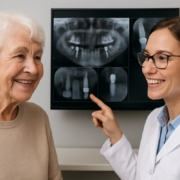
A smiling senior woman is talking with a friendly, professional, middle-aged female implant dentist. The dentist is pointing to digital X-rays on a monitor in the background. No text on image.

Find The Top Implant Dentist Near You For Permanent Teeth

Finding the top implant dentist near me matters because dental implants are a long‑term health and financial commitment. “Top” means safety, predictable results, modern technology, clear warranties, and a team that follows proven protocols.

This guide walks you through what to look for, the questions to ask, the process, and a simple checklist to compare providers so you can choose with confidence.

What “Top Implant Dentist” Really Means

A top implant dentist combines education, hands‑on experience, documented outcomes, and professional recognition. Look for providers with advanced training in prosthodontics or oral surgery, a track record with full‑mouth reconstructions, published case studies or presentations, and memberships in respected organizations. These markers lower risk, improve function, and help ensure you get a restoration that lasts.

Key Credentials and Experience To Look For

Board certifications and advanced training

Search for prosthodontists, oral surgeons, or dentists who completed implant fellowships and regular continuing education. Advanced training means they understand complex cases like bone grafting and full‑arch restorations.

Case volume and outcomes

Experience matters. Dentists who have placed hundreds or thousands of implants have worked through more scenarios and refined their workflows. Consistent, successful outcomes reduce the chance of complications.

Patient reviews and before/after photos

Real patient reviews, verified testimonials, and before/after galleries show what the practice actually delivers. Watch for consistent results, clear photo dates, and follow‑up images. Be cautious of overly polished galleries without case details.

Questions to Ask During Your Search for a Top Implant Dentist Near Me

– Do you offer immediate‑load/full‑mouth solutions in one visit when appropriate?

– What is your overall implant failure rate, and how do you manage complications?

– Do you perform digital planning and use 3D scans?

– Do you have an in‑house lab, and what milling systems do you use?

– Which implant systems and prosthetic materials do you use (zirconia vs. acrylic hybrid)?

– What warranties do you offer on the teeth and implants?

– What financing options or payment plans are available?

– What is the total expected timeline from consult to final restoration?

What to Expect From the Implant Process

Initial consult and digital planning

The visit usually includes a medical and dental history review, digital scans or CBCT 3D imaging, and a treatment plan. Top providers use virtual smile design to map bone, hardware, and final tooth positions before surgery.

Surgical options and prosthetic choices

Options range from a single implant and crown to multiple implants supporting bridges or a full‑arch immediate‑load prosthesis. Material choices include solid‑block zirconia for durability and stain resistance or hybrid prostheses that combine a metal framework with layered teeth. Each option has tradeoffs in strength, aesthetics, and repairability.

Recovery, maintenance, and long‑term care

Initial healing takes weeks to months as the bone integrates. You’ll need good oral hygiene, routine exams, and possibly night guards. Regular maintenance helps protect your investment and prolongs the life of implants and prostheses.

Costs, Financing, and Warranties

Costs are driven by the number of implants, bone grafting needs, implant brand, and prosthetic materials. While exact prices vary, top practices offer financing, third‑party medical credit, and clear payment plans. A written warranty on prostheses and transparent policies for complications or repairs are important — ask for specifics in writing.

Technology That Separates Top Implant Dentists

– Digital scanning and CBCT 3D imaging for precise planning

– CAD/CAM workflows for consistent prosthetic fit

– Ceramill® 5‑axis milling for high‑precision zirconia restorations

– Smile design software for esthetic planning

– In‑house lab for faster turnaround and tighter quality control.

These technologies improve fit, speed treatment, and enhance aesthetics.

Simple Checklist To Compare Providers Near You

– Verified credentials (prosthodontist/oral surgeon or fellowship)

– Documented case gallery with before/after images

– Digital planning and CBCT use

– In‑house lab and CAD/CAM milling capability

– Experience with immediate‑load/full‑arch protocols

– Clear financing options and written cost estimates

– Lifetime or extended warranties for select restorations

– Transparent communication and verified patient testimonials

Why Choose OneSolution®

OneSolution® Dental Implant Centers is led by Dr. Eli Friedman and a team focused on full‑mouth reconstructions and immediate‑load protocols when clinically appropriate. The network uses an in‑house lab with Ceramill 5‑axis milling and solid‑block zirconia, offers extended or lifetime warranties on select zirconia cases, and provides coordinated care across multiple South Florida locations. Their team emphasizes advanced planning, consistent delivery, and patient communication.

How to Book a Consultation with a Top Implant Dentist Near Me

1. Gather recent dental records, x‑rays, and a list of medications.

2. Take photos of your smile from multiple angles.

3. Print or save the checklist above and highlight your top questions.

4. Call or book online for a digital consult; expect scans and a customized plan at the first visit.

5. Compare written plans from two or more providers to evaluate technology, timelines, warranties, and total cost.

Quick FAQs

Am I a candidate for immediate‑load (same‑day) implants?

Candidates need enough healthy bone and a low risk of infection. A 3D scan and clinical exam determine if immediate loading is safe.

How long do implant prostheses last?

Implants can last for decades with proper care. Prosthetic teeth vary: solid zirconia is very long‑lasting; hybrids may need maintenance. Regular follow‑ups extend lifespan.

Will my insurance cover implants?

Dental insurance sometimes covers parts of the restorative work, but often not the full cost. Many practices offer financing and written estimates to clarify out‑of‑pocket obligations. If you want help comparing local options, bring this checklist and your questions to appointments so you can find the top implant dentist near me who fits your needs and goals.

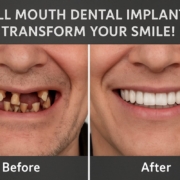
A before and after image showcasing a patient's smile transformation with full mouth dental implants. The "before" side shows missing and damaged teeth, while the "after" side displays a complete, natural-looking set of teeth. Text on the image says "Full Mouth Dental Implants: Transform Your Smile!"

Everything About Full Mouth Dental Implants Near Palm Beach County, FL

Full mouth dental implants can restore a full set of teeth that look, feel, and function like natural teeth. This guide covers what full-mouth dental implants are, who may qualify, treatment steps, costs, risks, and how to start a consultation — all focused on full-mouth dental implants in Palm Beach County, FL, so you know what to expect in one short read.

What Are Full Mouth Dental Implants in Palm Beach County, FL?

Full mouth dental implants replace an entire upper, lower, or both arches using dental implants as anchors. Unlike single implants or removable dentures, full mouth solutions can be fixed (permanent) or implant‑retained removable prostheses. Common terms you may hear include All‑on‑4, hybrid prosthesis, and zirconia bridge — each describes how implants support the prosthetic teeth.

Who Is A Candidate For Full Mouth Dental Implants in Palm Beach County, FL?

General health and medical considerations

Good overall health improves success. Chronic conditions like uncontrolled diabetes, certain autoimmune disorders, or medications that affect bone healing (bisphosphonates, some cancer drugs) may require medical clearance or make implants riskier.

Oral health and bone requirements

Adequate jawbone and healthy gums are important. Long‑term tooth loss can lead to bone loss, which may require bone grafting. Exams and 3D scans determine if extractions, bone grafts, or sinus lifts are needed before implants.

Realistic expectations and lifestyle factors

Non‑smokers and patients who commit to good oral hygiene and follow‑up visits see the best outcomes. Expect multiple visits, healing time, and a commitment to ongoing maintenance for long‑term success.

Types Of Full Mouth Solutions, Palm Beach County, FL

Options include fixed implant‑supported bridges (permanent), hybrid prostheses (acrylic teeth on a metal framework), All‑on‑4/All‑on‑6 treatments that use fewer implants with strategic angulation, and removable overdentures clipped to implants. Fixed options offer the best function and feel; removable tends to be less costly and easier to clean.

What To Expect During Treatment For Full Mouth Dental Implants, Palm Beach County, FL

Treatment usually starts with a consultation and 3D planning, followed by any needed extractions. Implants are placed surgically, followed by either immediate‑load (temporary teeth same day) or delayed restoration once the bone heals. Final restorations are delivered after fit and esthetics are verified.

Technology That Helps

Digital scanning, CAD/CAM design, guided surgery, and in‑house milling improve precision and speed. These tools let clinicians plan implant positions and fabricate well‑fitting prostheses faster and with fewer adjustments.

Costs, Insurance, And Financing For Full Mouth Dental Implants, Palm Beach County, FL

Costs vary by number of implants, grafting, materials (zirconia vs acrylic), and lab work. Insurance may cover some extractions or limited parts of treatment, but often not implants. Ask for an itemized estimate, financing plans, and any available warranties before starting.

Risks, Recovery, And Long‑Term Care For Full Mouth Dental Implants, Palm Beach County, FL

Short‑term risks include swelling, infection, and temporary numbness. Most healing takes weeks to months. Long‑term care involves regular cleanings, prosthesis checks, and good daily hygiene. Report persistent pain, increasing swelling, or loose implants promptly.

Why Choose A Specialized Implant Center For Full Mouth Dental Implants, Palm Beach County, FL

A specialized implant center brings focused experience, in‑house labs, and coordinated teams that shorten treatment time and improve outcomes. OneSolution® Dental Implant Centers offers a specialized team led by Dr. Eli Friedman, advanced CAD/CAM workflows, in‑house milling, immediate‑load experience, and a lifetime warranty on select zirconia restorations.

How To Get Started With Full Mouth Dental Implants, Palm Beach County, FL

Bring recent dental records, a list of medications, and any medical history to your consult. Ask about the team’s implant experience, success rates, timeline, itemized costs, and warranty details. To take the next step, schedule an evaluation or virtual consult to review options and a personalized plan.

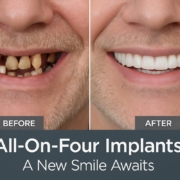
A before-and-after image showcasing a patient's smile transformation with All-on-Four dental implants. The "before" side shows damaged or missing teeth, and the "after" side displays a full, natural-looking set of teeth. Text on image: "All-On-Four Implants: A New Smile Awaits".

All On Four Dental Implants: Is It Right For You By Plantation, FL?

All-On-Four Dental Implants in Plantation, FL: Is It Right For You?

Maybe.

All‑on‑Four is a full‑arch solution that can replace an entire upper or lower set of teeth using four or more implants to anchor a fixed prosthesis. This post explains what All‑on‑Four is, how it works, who is a good candidate, the benefits and risks, estimated costs, and next steps so you can decide whether All-on-Four implants are right for you.

What Are All‑on‑Four Dental Implants?

All‑on‑Four is a method for replacing a full arch of teeth on just four (or occasionally more) implants. The implants are placed in strategic positions, often with the back implants tilted to use stronger bone. A fixed prosthesis is attached to those implants, giving a permanent set of teeth that look and function like natural teeth. Unlike single implants that replace one tooth at a time, All‑on‑Four treats a whole arch at once and often offers an immediate‑load option so patients can leave with temporary teeth the same day.

How All‑on‑Four Implants Work — all on four implants plantation fl

Treatment begins with an exam and scans to evaluate bone and plan implant positions. Digital planning and guided surgery map the ideal implant placement. On surgery day, teeth are removed if needed, implants are placed, and a temporary fixed prosthesis is attached when clinically appropriate. Over months, the implants integrate with the bone while you wear the temporary. After healing, the final prosthesis (often milled zirconia or hybrid acrylic) is delivered. Many practices in Florida offering all-on-four implants use the same-day protocols for qualified patients.

Who Is a Good Candidate?

Denture wearers and people with failing teeth

People who have loose teeth, failing dental work, or uncomfortable dentures often choose All‑on‑Four because it converts a removable denture into a fixed set of teeth. It restores chewing ability and improves speech and confidence.

Bone volume and why it matters

All‑on‑Four uses tilted posterior implants to engage better bone and reduce the need for bone grafts. That said, some patients with severe bone loss may still need grafting or other procedures. A digital scan and 3D x‑ray determine if you can avoid grafts.

Medical and lifestyle considerations

Good overall health helps healing. Conditions like uncontrolled diabetes or heavy smoking increase the risk of complications and may affect candidacy. Your clinician will review your medications, medical history, and habits to assess your risk and plan your care.

Main Benefits of All‑on‑Four vs Dentures or Individual Implants

All‑on‑Four provides greater stability than removable dentures and better chewing efficiency. It improves speech and facial support and typically offers faster overall treatment than placing many single implants. Because fewer implants are used for a whole arch, cost and treatment time are often lower than for full‑arch single implants. Immediate function—leaving the office with fixed teeth—is a major advantage for many patients.

Treatment Timeline and What to Expect for all on four implants plantation fl

Start with a consult, digital scan, and treatment plan. On surgery day, you’ll receive implants and, if eligible, a screw‑retained temporary prosthesis. Expect soreness and swelling for several days; most patients use prescription or OTC pain meds. Follow‑ups at short intervals monitor healing. After 3–6 months of bone integration, the final prosthesis is delivered. Regular checkups and professional cleanings continue after that. Many practices offering all-on-four implants in Florida provide sedation options and comfort measures during the procedure.

Risks, Limitations, and Long‑Term Care

Common risks include infection, implant failure, and prosthetic wear or fracture. Signs to watch for are persistent pain, swelling, or loosening of the prosthesis. Long‑term care includes daily cleaning under and around the prosthesis, routine dental visits, occlusal checks, and occasional repairs or relines. Factors such as oral hygiene, bruxism (grinding), and smoking affect longevity. With proper care, many patients enjoy years of function, but parts such as screws or acrylic teeth may need maintenance.

Estimated Cost and Financing Options for all on four implants plantation fl

Costs vary by materials, lab fees, number of implants, and whether bone grafts or extractions are needed. Typical ranges for a single arch are roughly $15,000 to $35,000. Higher‑end permanent zirconia bridges and in‑house CAD/CAM work can increase cost. Common payment options include dental savings plans, third‑party financing (CareCredit or similar), in‑house payment plans, and splitting treatment over phases. Most medical and dental insurance plans do not fully cover All‑on‑Four; your consultation should clarify the expected patient costs and financing options.

Why Choose OneSolution® Dental Implant Centers for all on four implants plantation fl

OneSolution® focuses on full‑mouth reconstructions and immediate‑load protocols when clinically appropriate. Led by Dr. Eli Friedman and a team of specialists, the network uses in-house labs, CAD/CAM milling, and solid‑block zirconia options to deliver durable, natural results. Their Plantation care team offers same‑day workflows, digital planning, and a lifetime zirconia warranty for select cases. Financing and clear treatment plans are part of their patient‑centered approach.

Frequently Asked Questions

How long do All‑on‑Four implants last?

With proper care, implants can last decades. The prosthesis materials may need maintenance or replacement over time, depending on wear and habits.

Will I have teeth the same day?

Often yes. If you’re a candidate for immediate load, a temporary fixed prosthesis can be attached the same day as implant placement.

Do All‑on‑Four implants hurt?

Most patients report manageable discomfort after surgery. Modern anesthesia, sedation options, and pain control make the procedure tolerable for most people.

Can smokers get All‑on‑Four?

Smoking raises the risk of complications and implant failure. Many providers advise quitting or reducing smoking before and after treatment to improve success.

Next Steps — How to Get a Consultation

If you’re considering all-on-four implants in Plantation, FL, schedule an exam and digital scan to determine candidacy. Bring a list of medications and any recent dental records or x‑rays. At the consult the team will review medical history, treatment options, expected costs, and financing. If All‑on‑Four is right for you, they can outline a personalized plan and next steps to restore function and confidence.

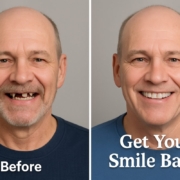
Before and after photo of a patient who received full mouth dental implants. The after photo has the text "Get Your Smile Back!" on the lower third.

Full Mouth Dental Implants: The Complete Guide Near Hialeah, FL

This guide explains full-mouth dental implants near Hialeah, FL, and is for anyone weighing major tooth-replacement options. You’ll learn what full-arch implants are, who makes a good candidate, the step‑by‑step treatment process, costs and financing, risks and recovery, alternatives, how to choose a provider, and quick FAQs. The goal is to help you understand your options, timing, likely costs, and how to find quality care so you can make an informed decision about full-mouth dental implants in Hialeah, FL.

What Are Full Mouth Dental Implants?

Full mouth dental implants replace an entire upper or lower set of teeth using a series of dental implants that support a fixed prosthesis. Common terms include all‑on‑4, implant‑supported bridge, and fixed zirconia prosthesis. Unlike removable dentures, full‑arch implants are fixed in place and restore chewing function more like natural teeth. Compared with single-implant solutions, full‑arch solutions use multiple implants to support a larger prosthesis, helping preserve jawbone and improving speech, comfort, and biting force.

Who Is a Good Candidate for Full Mouth Dental Implants?

Good candidates typically have many failing teeth, advanced tooth loss, or long‑term denture wear, and want a permanent solution. Adequate bone is helpful, but many patients qualify after bone grafting or sinus lifts. Medical factors matter: diabetes should be well controlled, smoking increases risks and may require quitting, and certain osteoporosis medications can affect healing. A dentist will review your health history, medications, and imaging to confirm candidacy and plan any necessary preparatory care.

The Step‑by‑Step Treatment Process

Initial consultation and 3D planning

Your team will take digital scans and a CBCT 3D x‑ray to map bone, nerves, and sinus anatomy. These images guide a virtual treatment plan and surgical guide, so implants are placed precisely. The plan includes the teeth position, the number of implants, and whether immediate teeth are possible.

Extractions and bone grafting (if needed)

If failing teeth remain, they may be extracted during a first visit. Bone grafts or sinus lifts may be placed when jaw bone is insufficient. Healing after grafting takes weeks to months, depending on the procedure, though some protocols allow implants later or in staged phases.

Implant placement and immediate‑load options

Many patients qualify for immediate‑load protocols that provide temporary fixed teeth the same day as implant placement. Traditional staged approaches place implants and allow months of healing before fitting the final teeth. Your surgeon will decide based on bone quality, implant stability, and overall health.

Final restorations and follow‑up

After healing, the final prosthesis—often a high‑strength zirconia bridge—is fabricated and adjusted. Temporary teeth protect function during healing. Routine follow‑ups check tissue health, bite, and prosthetic fit. Regular hygiene visits and home care help implants last.

Benefits of Choosing Full Mouth Dental Implants Near Hialeah, FL

Full mouth dental implants near Hialeah, FL restore chewing power, improve speech, and boost confidence compared with removable dentures. Fixed zirconia prostheses are durable, stain-resistant, and can provide a natural look and feel. Implants prevent bone loss by transmitting chewing forces into the jaw, helping preserve facial structure. With proper planning and technology, predictable outcomes and long service life are common.

Costs, Financing, and Insurance

Costs vary widely. Expect ranges based on the number of implants, the need for grafting, and the prosthesis material—typical full‑arch treatments often fall in the moderate to higher price tiers due to complexity and materials. Financing options include in‑house plans, third‑party dental/medical financing, and credit programs. Dental insurance often covers part of extractions or limited lab fees, but rarely covers full implant prostheses. Medicare and Medicaid generally do not cover routine implant dentistry.

Risks, Recovery, and What to Expect After Surgery

Common risks include infection, implant failure, prosthetic adjustments, and temporary swelling or numbness. Pain is usually managed with medications and subsides within days to a week; solid foods are gradually reintroduced per your surgeon’s instructions. Watch for persistent swelling, fever, severe pain, or loose implants—these require prompt evaluation. Expect multiple follow‑up visits during the first year to monitor healing and prosthetic fit.

Alternatives to Full Mouth Dental Implants

Options include removable full dentures (lowest cost, less chewing power), implant‑retained overdentures (fewer implants anchoring a removable denture), and partial implant solutions (for limited tooth loss). Removable dentures are easier and cheaper but less stable. Overdentures improve stability but still require maintenance. Weigh cost, function, and maintenance when comparing options.

How to Choose a Provider for Full Mouth Dental Implants Near Hialeah, FL

Look for providers with advanced implant training, prosthodontic experience, and a clear digital workflow. Ask to see before/after cases and patient reviews, confirm in‑house lab capabilities or strong lab partnerships, and check for clear financing and warranty policies. Important questions: Who will perform the surgery, and who will design the teeth? What technologies are used (CBCT, digital scan, CAD/CAM)? What are the success rates and follow‑up protocols?

About OneSolution® Dental Implant Centers — Experience and Technology (light glazing)

OneSolution® Dental Implant Centers is a network led by Dr. Eli Friedman that focuses on full‑mouth reconstructions and same‑day protocols when clinically appropriate. The model pairs advanced materials with a digital workflow and in‑house fabrication, and offers a lifetime warranty on zirconia in select cases. The network operates multiple South Florida locations and emphasizes efficient treatment and durable outcomes without claiming a presence in Hialeah.

Key Technologies That Improve Outcomes

CBCT and digital scanning guide precise implant placement and planning. CAD/CAM design and a Ceramill 5‑axis milling machine produce tightly fitting, high‑strength zirconia prostheses. In‑house labs and smile‑design software speed turnaround and allow custom esthetics. Solid‑block zirconia gives strong, stain‑resistant final teeth that look natural and last longer.

Common Questions (FAQ)

Q: How long do implants last?

A: With good care, implants and zirconia prostheses can last decades; regular maintenance increases lifespan.


Q: Will insurance pay?

A: Most dental plans limit implant coverage; Medicare and Medicaid usually don’t cover implants. Verify with your carrier.


Q: How painful is the process?

A: Discomfort is manageable with medication. Most patients report soreness for several days, improving quickly.


Q: Can I get teeth the same day?

A: Many patients qualify for immediate‑load “same‑day” teeth, but eligibility depends on bone quality and surgical stability.

Next Steps and Call to Action

To get started, schedule a consultation and bring any dental records or x‑rays. Ask about digital planning, immediate‑load eligibility, financing options, and warranties. If you’re considering full-mouth dental implants near Hialeah, FL, book a consult to review your imaging and get a personalized plan to restore function and confidence.

Close-up of a diverse group of people in a dental office, smiling and engaged in a discussion about dental implant options with a friendly dentist.

Affordable Dental Implants in Broward County, FL: A Comprehensive Guide

If you’re searching for the most affordable dental implants near me in Broward County, FL, cost will likely be a top concern. Prices vary by clinic, the materials used, and the exact scope of work. This guide helps you compare local options, spot true value, and take practical next steps so you can choose care that fits your budget without sacrificing quality.

Read on for clear steps to compare quotes, understand what’s included, find local quality indicators, and use financing and discounts that lower out‑of‑pocket costs. Use these tips to find the most affordable dental implants near me in Broward County, FL that still meet your needs.

How to Find the Most Affordable Dental Implants Near Me in Broward County, FL

Search and compare full-cost estimates

Ask clinics for itemized quotes so you can compare the real price. A full quote should list:

  • Implant post(s)
  • Abutment(s)
  • Crown or prosthesis
  • Imaging (CBCT, X‑rays)
  • Bone grafts or sinus lifts (if needed)
  • Lab fees and tech costs

Compare total costs, not just a headline price. A lower starting price can grow if major items are extra.

Check what’s included in the price

Confirm which services are in the quote. Inquire about:

  • Consultations and follow‑up visits
  • Anesthesia or sedation fees
  • Temporary teeth or same‑day provisional prostheses
  • Warranties or guarantees on materials and work

Understanding inclusions helps you find the most affordable dental implants near me in Broward County, FL, for true long‑term value.

Use local reviews and before/after galleries

Read patient reviews from Broward County residents and study case photos. Look for consistent results and honest feedback about comfort, timing, and follow‑up care. Low price alone isn’t enough—quality and durability are also important.

Ask about local, in-house resources that lower costs

Practices with in‑house labs, digital workflows, and milling equipment often save time and lower repeat visits. Ask whether the clinic fabricates restorations on-site or uses digital planning tools. These resources can reduce total cost and patient time in the chair.

Financing, Discounts, and Practical Tips to Secure the Most Affordable Dental Implants Near Me in Broward County, FL

There are practical ways to lower upfront cost and spread payments while you get safe, effective care. Consider these options when seeking the most affordable dental implants near me in Broward County, FL.

Common financing and payment options

Many offices offer payment plans that split costs into monthly payments. You can also use third‑party medical/dental lenders and short‑term credit plans. Ask about in‑house plans; sometimes a practice will discount work for cash or offer no‑interest periods.

Insurance, HSAs, and alternative funding

Dental insurance often caps implant costs, but it can cover portions such as crowns or extractions. Use HSAs or FSAs when allowed. For major reconstructions, check whether medical insurance might apply under certain conditions.

Timing, promotions, and warranties

Look for seasonal specials, bundled pricing for multiple implants, or reduced fees for immediate‑load cases. A strong warranty, especially for zirconia prostheses, can add value and reduce future repair costs—factor that into your affordability check.

Questions to ask before committing

  • What is the total cost, and can you get an itemized estimate?
  • How many visits and what is the expected timeline?
  • Who performs each step — the surgeon or a different restorative dentist?
  • Are imaging, sedation, and lab fees included?
  • What is the revision or complication policy and any warranty terms?

Keep this checklist handy when you compare three or more local practices. Comparing like‑for‑like quotes will reveal who offers real savings.

Choosing a Broward County Provider — A brief note about OneSolution®

When weighing cost and quality, consider clinics with local expertise, digital workflows, and clear financing. OneSolution Dental Implant Centers offers single-visit protocols when appropriate, in-house fabrication, and transparent payment options throughout South Florida. Led by Dr. Eli Friedman and a team of specialists, OneSolution® offers advanced digital planning, a Ceramill® milling workflow, and a lifetime warranty on zirconia teeth for select cases. If you want an itemized estimate and a timeline, contact a Broward County location to compare their offer for the most affordable dental implants near me in Broward County, FL.

Next steps: gather itemized quotes from at least three Broward County practices, check local patient photos and reviews, and ask each office the checklist questions above. That process will help you find the most affordable and reliable option near you.

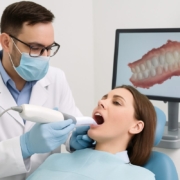
Image of a dentist examining a patient's jaw with a 3D scanner, illustrating the assessment process for full mouth dental implants.

Understanding Full Mouth Dental Implants: An Informative Overview

Thinking about full mouth dental implants? This overview answers the common question “Can you get full mouth dental implants?” and explains who they help, what the process looks like, and how to handle costs and insurance. Read on for clear steps you can take next, including when to get imaging and when to schedule a consultation.

What Are Full Mouth Dental Implants?

Full mouth dental implants replace all or most teeth in one or both arches using multiple dental implants that anchor a fixed prosthesis. Unlike removable dentures, implant‑supported prostheses restore chewing strength, speech, and a natural look. Options range from hybrid prostheses (acrylic on metal) to full solid zirconia bridges. Treatment can be staged or performed with immediate‑load protocols that provide temporary teeth on the day of surgery when clinically appropriate.

Detailed Steps in the Full Mouth Implant Surgery Process

The treatment typically follows these steps: consultation and digital scans, 3D planning, extraction of failing teeth (if needed), implant placement, and attachment of a temporary or final prosthesis. Healing time varies; some patients receive immediate teeth while others wait for osseointegration before final restorations. Advanced tools like CBCT scans, guided surgery, and in‑house milling help speed the process and improve fit.

Can You Get Full Mouth Dental Implants? Who Is a Candidate

Short answer: often yes, but candidacy depends on health, jawbone condition, and lifestyle. Saying “can you get full mouth dental implants” is the right first step — the final answer comes after an exam and imaging. Here are the key factors clinicians review.

General health and medical conditions

Chronic conditions like diabetes, heart disease, or autoimmune disorders can affect healing. Well-controlled diabetes or stable heart disease does not automatically disqualify you, but physicians’ clearance is often recommended. Certain medications (bisphosphonates, some immunosuppressants) raise risk and require careful planning or consultation with your doctor.

Jawbone and gum health

Adequate bone volume and healthy gums are critical. Long‑term tooth loss or periodontal disease can cause bone loss, which may require bone grafts or sinus lifts before implants. Modern CBCT/digital scans let clinicians measure bone precisely and plan whether additional grafting or angled implants can avoid extra procedures.

Age, smoking, and lifestyle factors

Age alone is not a barrier; many older adults successfully receive full-mouth implants. Smoking and poor oral hygiene increase complications and slow healing. Patients who quit smoking, improve oral care, and follow post‑op instructions have much better outcomes.

When immediate‑load (Teeth in a Day) is possible

Immediate‑load or “Teeth in a Day” is an option when bone quality is good, implants achieve strong primary stability, and the case is carefully planned digitally. Not every patient qualifies, but when the criteria are met, you can leave surgery with temporarily fixed teeth and return later for final restorations.

Getting an exam with CBCT imaging is the only reliable way to confirm whether you can get full-mouth dental implants for your specific situation.

Can You Get Full Mouth Dental Implants? Costs, Insurance, and Payment Options

Many people ask, “Can you get full mouth dental implants?” and then quickly want to know what it costs. Price varies widely based on clinical needs and the materials chosen. Below are the main factors that affect affordability and how to manage costs.

Key cost drivers

  • Number and type of implants placed (more implants = higher cost)
  • Bone grafting or sinus lifts, when needed
  • Type of prosthesis (solid zirconia is pricier than acrylic hybrid options)
  • Lab work and custom milling for a precise fit
  • Use of immediate‑load protocols and additional surgical guides

Insurance and coverage basics

Most dental plans limit coverage for implants and often treat parts of the process (like extractions) differently from restorative work. Medical insurance rarely covers implants unless there’s a documented medical need. Ask your insurer about pre‑authorization and get treatment codes in writing to avoid surprises.

Financing and payment plans

Many practices offer in‑house financing, third‑party lenders, or medical credit cards to spread payments over time. Some patients combine savings, insurance benefits, and financing to make treatment manageable. Ask for examples of monthly costs to compare options.

Getting a transparent estimate

Request an itemized treatment plan after scans and consultation. A clear estimate lists implant fees, grafting, prosthesis type, lab charges, and follow‑up visits so you know exactly what you’re being charged for and can compare providers fairly.

Schedule a Consultation with Dr. Eli Friedman, Implant Specialist

OneSolution Dental Implant Centers specializes in full-mouth reconstructions and immediate-load protocols, delivered when clinically appropriate. Led by Dr. Eli Friedman and a multidisciplinary team, the centers use digital planning, in‑house milling, and solid‑block zirconia options to deliver durable, aesthetic outcomes. If you’re asking, “Can you get full mouth dental implants?” Schedule a consultation for CBCT imaging, a personalized treatment plan, and a transparent, itemized estimate.

If you want to move forward, book an exam and 3D scan so your provider can confirm candidacy and outline next steps tailored to your health, bone anatomy, and budget.